

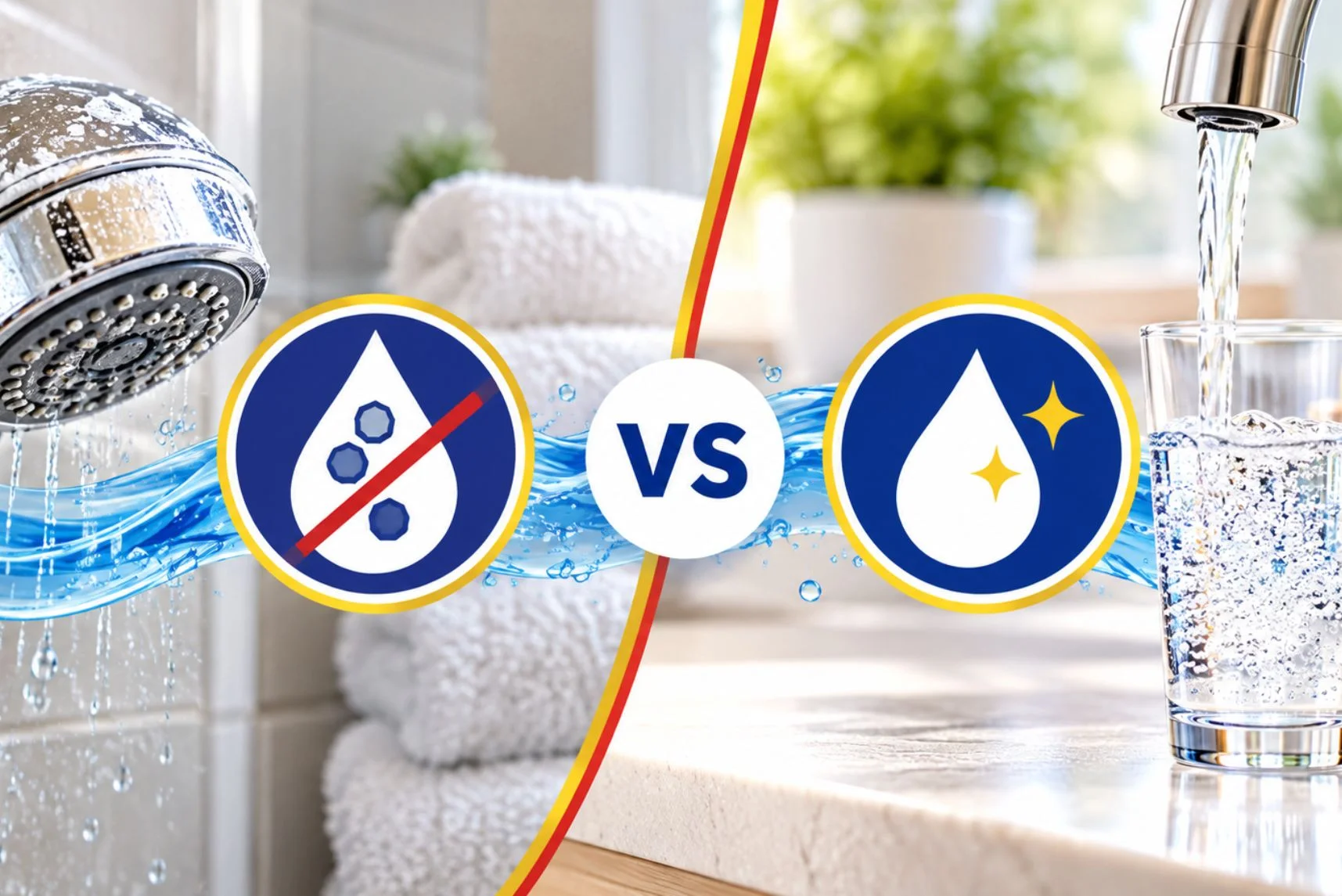
If you’ve noticed spots on your glassware, buildup around your faucets, an unusual taste or smell in your tap water, or water that simply doesn’t seem as fresh as you’d like, you may be wondering whether your home needs a water filtration system, a water softener, or both.
Although water filtration and water softening are often discussed together, they solve different water quality problems.
For homeowners in Chico and surrounding Northern California communities, understanding the difference can help you choose a water treatment solution that addresses what’s actually happening with the water in your home.
Royal Aire offers customized water treatment solutions for Chico-area homeowners, including EcoWater water softeners and reverse osmosis systems, along with free water testing to help you better understand your home’s water quality and treatment options.
What Is the Difference Between Water Filtration and Water Softening?
The simplest answer is this:
Water filtration is designed to reduce certain unwanted substances that can affect your water’s taste, odor, or quality. Water softening is designed primarily to address hard water minerals such as calcium and magnesium.
Because these systems perform different jobs, one isn’t necessarily better than the other. The right solution depends on your household’s water and the problems you’re trying to solve.
Let’s take a closer look.
What Does a Water Filtration System Do?
Water filtration is designed to improve water quality by reducing specific unwanted substances.
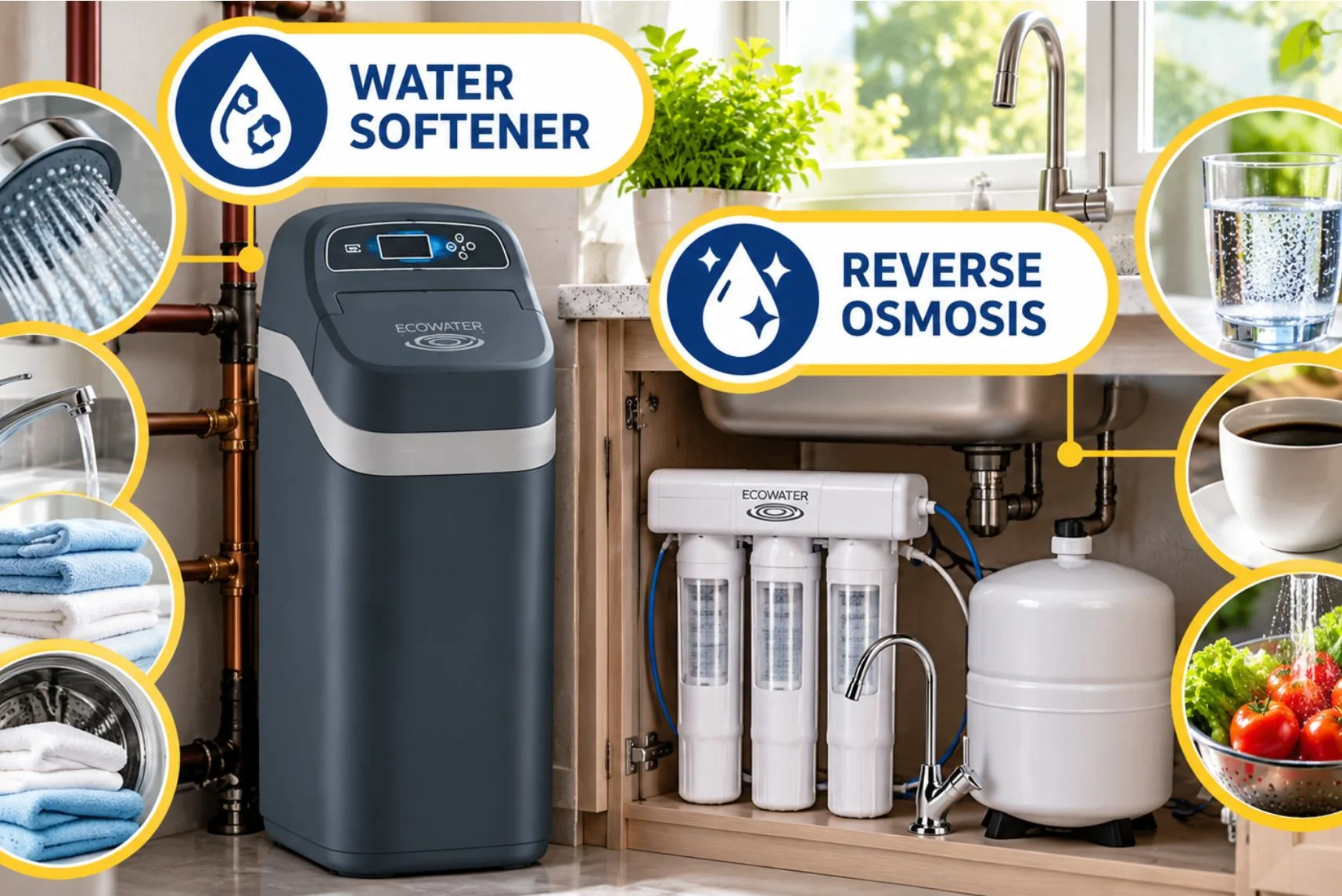
Royal Aire offers EcoWater reverse osmosis systems for homeowners who want to improve the quality of the water they use for drinking and cooking. Reverse osmosis, commonly referred to as RO, uses a specialized membrane and filtration process to reduce certain impurities in your water.
Depending on the system and your home’s water conditions, filtration may help address concerns such as:
- Unpleasant tastes or odors
- Certain dissolved substances and impurities
- Drinking water quality
- Water that simply doesn’t taste as fresh or clean as you’d like
Reverse osmosis is commonly used for drinking and cooking water, giving homeowners another option beyond relying on bottled water.
When Should You Consider Reverse Osmosis?
A reverse osmosis system may be worth exploring if your primary concern is the quality, taste, or odor of the water your family drinks and cooks with.
If you frequently reach for bottled water because you don’t like the taste of your tap water, or you simply want to improve the quality of the water coming from your faucet, an RO system may be a good solution.
The first step, however, is understanding what’s actually in your water.
What Does a Water Softener Do?
A water softener has a different purpose. It is designed to reduce the minerals responsible for hard water.
Hard water typically contains elevated levels of dissolved calcium and magnesium. While these minerals aren’t necessarily the same as contaminants, they can create frustrating problems throughout your home.
Common signs of hard water include:
- White or chalky buildup around faucets and showerheads
- Spots left behind on glasses and dishes
- Soap or shampoo that doesn’t seem to lather well
- Soap scum on tubs and shower doors
- Mineral buildup on plumbing fixtures
- Stiff or dull-feeling laundry
- Scale buildup in water-using appliances
A traditional water softener typically uses an ion-exchange process to reduce the calcium and magnesium responsible for water hardness, helping minimize the effects of hard water throughout your home.
Can Hard Water Affect Your Plumbing and Appliances?
Hard water can be more than a cleaning nuisance.
Over time, mineral deposits can accumulate on plumbing fixtures and inside water-using equipment. Scale buildup may affect faucets, showerheads, dishwashers, washing machines, and water heaters.
Addressing hard water can therefore do more than help reduce those annoying white spots on your glassware. It may also help reduce mineral buildup on the equipment and fixtures that rely on your home’s water.
If you’re constantly cleaning crusty deposits from faucets or noticing scale around your fixtures, your water may be telling you something.
Water Filtration vs. Water Softening: How Do You Know Which One You Need?
A good starting point is to consider the problems you’re noticing around your home.
If your drinking water has an unpleasant taste or odor:
A reverse osmosis system may be worth considering.
If you’re seeing white scale, mineral deposits, or spots on dishes:
A water softener may be the more appropriate solution.
If soap doesn’t lather well and you’re constantly battling soap scum:
Hard water may be contributing to the problem.
If you’re concerned about your overall water quality:
Water testing can help you better understand your home’s water and which treatment options may be appropriate.
If you’re experiencing both hard water and drinking water concerns:
Your home may benefit from a combination of water softening and reverse osmosis.
Rather than choosing equipment based solely on symptoms, it makes sense to start by understanding your home’s actual water conditions.
Can You Have Both a Water Softener and Reverse Osmosis System?
Yes. In fact, the two systems can work together because they address different water concerns.
A water softener addresses hardness minerals throughout your home.
A reverse osmosis system focuses on improving the quality of water used for drinking and cooking.
Royal Aire offers EcoWater water treatment solutions that can combine water softening and reverse osmosis, allowing homeowners to address both hard water and drinking water quality.
That doesn’t mean every Chico home needs both systems. Your ideal setup should be based on your water quality, household needs, and the specific issues you want to address.
Is Chico Water Hard?
Water hardness and overall water quality can vary based on the water source, location, and individual property. Even homes within the same general area can experience different water conditions.
That’s why visible clues such as mineral buildup can be helpful, but they don’t always tell the entire story.
If you’re concerned about hard water or drinking water quality in your Chico-area home, testing your water can provide a clearer picture of what’s happening.
Should You Test Your Water Before Choosing a Water Treatment System?
Yes. Water testing is one of the best places to start.
Instead of asking:
“Which water treatment system should I buy?”
A better question is:
“What’s in my water, and what do I want to improve?”
Once you understand your water quality, it becomes much easier to determine whether a water softener, reverse osmosis system, or combination of solutions makes sense.
Royal Aire offers free water testing to help Chico-area homeowners better understand their water quality before deciding on a treatment solution.
Frequently Asked Questions About Water Filtration and Water Softening
Does reverse osmosis soften hard water?
Reverse osmosis and water softening serve different purposes. A water softener is specifically designed to address the calcium and magnesium associated with hard water, while reverse osmosis is used to improve drinking water quality by reducing certain dissolved substances and impurities.
Does a water softener filter drinking water?
A traditional water softener’s primary job is reducing hardness minerals. It isn’t designed to perform the same job as a reverse osmosis drinking water system.
How can I tell if my Chico home has hard water?
Common signs include white scale around faucets, spots on dishes and glassware, soap scum, difficulty getting soap to lather, and mineral buildup on water-using fixtures. Water testing can help provide more information about your home’s water.
What are the benefits of a reverse osmosis system?
Reverse osmosis can help improve the taste and quality of drinking and cooking water by reducing certain unwanted substances. The exact performance of an RO system depends on the system itself and the substances present in the water.
Do I need both reverse osmosis and a water softener?
Not necessarily. Some households may primarily need help with hard water, while others are more concerned about drinking water quality. Homes experiencing both issues may benefit from having both types of treatment.
What brand of water softener and reverse osmosis system does Royal Aire offer?
Royal Aire offers EcoWater water treatment solutions, including water softening and reverse osmosis options. The right system for your home depends on your water quality and the specific concerns you want to address.
Does Royal Aire offer water testing in Chico, CA?
Yes. Royal Aire offers free water testing to help homeowners better understand their water quality and explore appropriate water treatment options.
Get Better Water at Home With Royal Aire
You shouldn’t have to guess what’s happening with your home’s water.
Whether you’re dealing with hard water buildup, unpleasant-tasting drinking water, or simply want to know more about the water your family uses every day, Royal Aire can help.
Royal Aire offers EcoWater water softening and reverse osmosis solutions for Chico-area homeowners, along with free water testing to help identify the right approach for your home.
Schedule your free water test with Royal Aire today and find out whether a water softener, reverse osmosis system, or combination of solutions may be right for your home.
Royal Aire: Comfort That’s Just Right!